
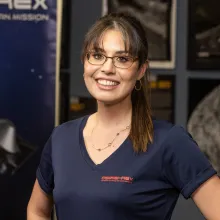
Dani DellaGiustina is the principal investigator for OSIRIS-APEX and an assistant professor of planetary science in the University of Arizona Lunar and Planetary Laboratory. Her research interests include the surface and near-surface structure of small airless worlds across the solar system. She is especially interested in water distribution through the solar system. For her investigations, she develops and uses remote-sensing and geophysical instruments deployed by spacecraft. She also tests and validates instrumentation techniques in extreme Earth environments that are similar to landscapes on other worlds.
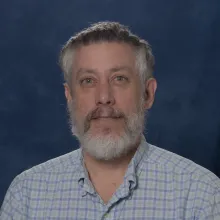
Michael Nolan is a research professor at the University of Arizona Lunar and Planetary Laboratory and the deputy principal investigator of the OSIRIS-APEX mission. His primary responsibility is organizing the OSIRIS-APEX science team. His research focuses on the physical processes of asteroid evolution and their connection to meteorites. From 2006 to 2015, he led the Planetary Radar Program at the Arecibo Observatory and uses that data to better understand the processes that affect asteroid evolution.

Anjani Polit manages instrument operations and spacecraft observation planning and oversees daily operations at the mission's Science Processing and Operations Center for OSIRIS-APEX. She also provides management oversight for science operations and science team finances, scheduling and resource allocation. Anjani previously worked as the mission implementation systems engineer for the OSIRIS-REx and was the uplink operations lead for the HiRISE camera on the Mars Reconnaissance Orbiter.

Dathon Golish joined the OSIRIS-REx mission in October 2013 as part of the OCAMS team. Dathon was primarily responsible for analysis of images acquired as part of the OCAMS ground test campaign, which calibrated and validated the performance of the three OCAMS imagers. He wrote, and continues to maintain, the calibration pipeline that processes every OCAMS image. When OSIRIS-REx launched, Dathon transitioned to the Image Processing Working Group, where he took responsibility for observation planning, data quality analyses, photometric modeling of Bennu, and mapping of its surface. Dathon received his PhD in Optical Sciences in 2008 from the University of Arizona; his graduate worked focused on quasioptical instrumentation for terahertz astronomical receivers. Dathon also conducted research in gigapixel and computational imaging in the UArizona Electrical and Computer Engineering department as a research professor.

Mike has worked for NASA’s Goddard Space Flight Center since 2001 and has been part of the OSIRIS-REx team since 2013. He led the O-REx navigation team through development and the first three years of mission operations, before becoming Deputy Project Manager in 2019. Prior to joining O-REx, Mike worked in support of space navigation activities as part of Goddard’s Satellite Servicing Capabilities project, NASA’s Constellation Program, and two large national defense satellite programs. Mike earned degrees in mechanical engineering and aerospace engineering from the University of Vermont and University of Colorado, respectively. His Ph.D. research, which found application on a number of Earth orbiting satellites, focused on applications of the Global Positioning System in high Earth orbits. Mike grew up on a Vermont dairy farm. Outside of work, he enjoys live music, spending time with family, and exploring planet Earth.
Bio:
Bio:
Coralie Adam joined KinetX and the OSIRIS-REx team in 2011, and has served as the optical navigation lead engineer throughout mission development and into proximity operations at Bennu. She holds a B.S. and M.S. in aerospace engineering from the University of Illinois and University of Colorado, respectively. Coralie first started studying and imaging asteroids at age 16, and has since been involved in many small body exploration missions including Stardust-NExT, EPOXI, New Horizons, ROSETTA, and the upcoming Lucy mission. In 2018, she was honored with a NASA Early Career Achievement medal for her contributions to the Optical Navigation field. In addition to leading the OpNav team, Coralie has had an active role in preparations for TAG, including sample site selection and most recently as the TAG Navigation Manager. Outside of space navigation, Coralie enjoys listening to music, learning new skills, collecting vintage wares, and being outdoors.
Bio:
Bio:
Throughout his 20-year career at JPL, Peter was fortunate to have explored the asteroids, planets and moons of our solar system as a key Navigation Team member of NASA missions: Galileo, Near Earth Asteroid Rendezvous, Mars Odyssey, Mars Exploration Rovers, and Cassini. When the NEAR mission at 433-Eros was coming to an end, Peter designed, planned and led the end-of-mission operations with several close flyovers of the surface ending with a soft landing. Before joining KinetX in January of 2013 and eventually leading the OSIRIS-REx Navigation Team, Peter led the navigation of the twin orbiters of NASA’s GRAIL mission into synchronous orbit at the Moon. Peter earned his BS, MS and PhD degrees in Aerospace Engineering, respectively, from Purdue, University of Texas and University of Colorado. He is happily married to his wife of 26 years with four kids and lives in Colorado. Peter enjoys activities in the mountains and star gazing.
Bio:
Bio:
Bio:
Ron Ballouz is an astrophysicist at the Johns Hopkins Applied Physics Laboratory. His main research interests are asteroid collisional evolution, planetary surface processes, and planetary defense. His work combines theory, computer simulations, and observational data to understand the history of asteroids and moons that are the targets of sample return missions: OSIRIS-REx, Hayabusa2, and the future JAXA Phobos mission, MMX.
He received his B.S. in Astronomy & Astrophysics at Villanova University, and his PhD in Astronomy at the University of Maryland, College Park. For his PhD dissertation, he worked with Professor Derek C. Richardson on supercomputer simulations of collisional processes in the Solar System. Following his PhD, he worked at the Institute of Space and Astronautical Science in Sagamihara, Japan.
He was born in Davao City, Philippines and grew up in Beirut, Lebanon. He currently resides in Tucson, Arizona with his wife Kellie, their daughter Rosie, and their two French Bulldogs.
Bio:
Bio:
Bio:
Bio:
Bio:
Carina Bennett joined the team as a research analyst. She later transitioned to an Image Processing Engineer, was then promoted to Senior Image Processing Engineer, and will soon transition to the sample analysis team. Before OSIRIS-REx, Carina worked within the UArizona Office of Communications as a videographer and as a video editor and robotic camera operator at a television station. During this time, she was nominated for a Rocky Mountain Regional Emmy. Carina holds a BA in Media Arts and Creative Writing and a BS in Computer Science from UArizona, an MFA in Film Production from the University of Iowa, and will soon complete an MS in Computer Science from UArizona. In her spare time, Carina enjoys brewing beer, playing Dungeons and Dragons, and spending time with her husband and her German Shepard mix, Rita.
Bio:
Bio:
Bio:

Bio:
Denise joined the OSIRIS-REx team as the mission’s Business Manager in October 2018. She monitors expenses, coordinates purchasing, serves as administrative/financial liaison to the UArizona subcontracts, compiles monthly financial reports including 533s and the Monthly
Management Review, and manages personnel/HR affairs. Prior to joining OSIRIS-REx, Denise was Operations Coordinator for the UArizona Financial Services Office where she supervised the Accounts Payable Reimbursements Team and taught travel policy classes to administrative and business staff across the UArizona campus. Denise holds a Bachelor’s degree in Political Science from the University of Washington, and her career includes over 20 years in the administrative, financial, and business management areas. Thanks to her astronomer husband, she also enjoyed a 9 year sojourn in La Serena, Chile as a member of the Cerro Tololo Inter-American Observatory extended family; an incredible life experience that provided Denise, her husband, and two kids with a second language and culture.
Bio:
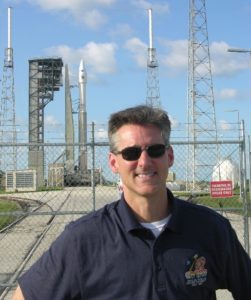
OSIRIS-REx is Brent Bos’ fifth planetary mission to have successfully left Earth’s gravity but only his first asteroid mission. After majoring in honors physics at the University of Michigan, he did his Ph.D. work at the University of Arizona, where he came to join Peter H. Smith’s Mars Atmospheric and Geologic Imaging (MAGI) team at the Lunar and Planetary Laboratory. After completing his Ph.D. work, he joined NASA in April 2002 to develop the James Webb Space Telescope (JWST) and first worked on the OSIRIS-REx mission concept in late 2010. After NASA headquarters selected OSIRIS-REx for implementation in May 2011, he served as the OSIRIS-REx systems engineering subject matter expert in optics and the OSIRIS-REx visible and infrared spectrometer (OVIRS) optics lead. In August 2015, he became the TAGCAMS (Touch and Go Camera System) instrument scientist and continues to serve in that role today.
Bio:
Bio:
Bio:
Bio:
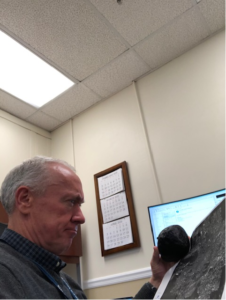
Rich serves as the project manager for OSIRIS-APEX. He joined OSIRIS-REx prior to launch to take operations phase management responsibility. He has been working at NASA managing missions in their operational phase since 2007. Prior to that, Rich worked at NASA as a GN&C systems engineer on several missions including Hubble servicing. He started his professional career at the Air Force Research Lab where he worked for 10 years as an astrodynamics engineer. Rich holds B.S. and M.S degrees in Mechanical Engineering from Notre Dame and Stanford, respectively. Outside of work, Rich prefers to be outside running, hiking, grilling, or gardening.
Bio:
Bio:

Bio:
Russell was the Navigation Lead for the OSIRIS Discovery proposal in 2007, and rejoined the project when he became the Technical Deputy of Goddard Space Science Mission Operations in 2016. He has been with NASA since 1987, spending most of his career as a Navigator at Johnson and Goddard, focused primarily on development of onboard navigation systems. He is an Associate Fellow of the American Institute of Aeronautics and Astronautics, has received the NASA Exceptional Service and Exceptional Achievement medals, and was the AIAA National Capital Section’s Young Scientist/Engineer of the Year in 2000. Russell attended The University of Texas at Austin, receiving a Ph.D. in Aerospace Engineering in 1996. He’s an instrument-rated private pilot, and built the RV-7A kitplane N418TX with two friends. He’s also an avid sailor who has taken many of the ORX team out on the Chesapeake Bay in his 1984 Freedom 25 “Unfettered.”
Bio:
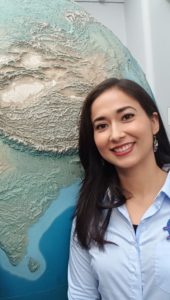
Prior to joining the OSIRIS-REx team, Nayi worked mission operations for Earth observing and lunar spacecraft. She held an internship on the Tropical Rainfall Measurement Mission (TRMM) Flight Operations Team. Here she certified as a flight controller and started mission planning training. After completing an Astronautical Engineering degree, Nayi moved on to the Terra spacecraft and supported 24/7 flight operations as an online controller and operations engineer. On the Lunar Reconnaissance Orbiter (LRO) she was as an Operations Lead, Mission Planner, and Deputy Technical Lead. Nayi completed her Master’s in Astronautical Engineering and the following year pursued an opportunity that enabled her to support the Mars Atmosphere and Volatile EvolutioN (MAVEN) and OSIRIS-REx missions.
Bio:
Bio:
Bio:
Bio:
Bio:
Bio:

Bio:
Christian joined the team as the Camera Suite Lead Optical Engineer. Christian was then promoted to his current Deputy Instrument Scientist role where he provides operational support for OCAMS and serves as an OSIRIS-REx Co-Investigator. Before OREx, Christian was an Optical Research Engineer and later Laboratory Manager at UArizona’s Steward Observatory. He then became a founding partner at TeraVision Inc. In addition to his OSIRS-REx work, Christian is designing several cameras to explore Jupiter’s moons and investigating the use of optical polarization to search for biosignatures in the solar system. Christian holds seven NASA Group Achievement Awards and Medals. Christian received a BSc. in Space Sciences & Astronomy and Astrophysics from the Florida Institute of Technology and a PhD in Optical Sciences from UArizona. In his spare time, Christian enjoys photography, bread baking and flying as an FAA Licensed Commercial Pilot. Asteroid 2005SH214 was renamed 129312 Drouetdaubigny in Christian’s honor.
Bio:
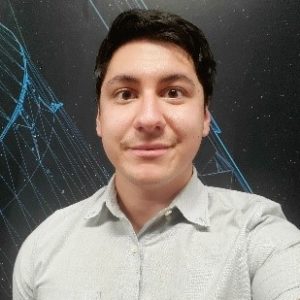
Marcos works as a System engineer on OSIRIS-APEX and as a multi-mission real-time operator for a variety of NASA missions. He has experience working as an orbit analyst on the AEHF launch team and as a structural dynamics intern at NASA Langley. Marcos received his Aerospace Engineering bachelor’s degree from the University of Arizona and is completing a master’s degree in Aerospace Engineering at the University of Colorado. Outside of work, Marcos enjoys hiking, kayaking and playing guitar.
Bio:
Bio:
Bio:
Bio:
Bio:
Bio:
Bio:
Bio:
Bio:
Bio:
Bio:
Bio:
Bio:

Bio:
Tony Ferro joined the OSIRIS-REx team in 2011 as the Science Processing and Operations Center (SPOC) IT Lead. Prior to joining OREx, Tony worked on archiving spectroscopic data on the International Halley Watch project at Arizona State University (ASU). Tony has also worked on other missions at UArizona in IT: first on the Hubble Space Telescope NICMOS Instrument Team then the Phoenix Mars Lander. Tony earned a BA in Physics from Cornell University in 1985 and an MS in Physics from ASU in 1995. In his free time, Tony enjoys animation and all things pop culture.
Bio:
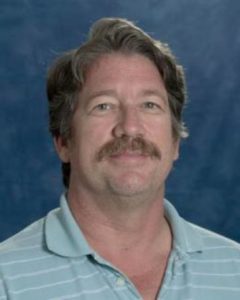
Mike Fitzgibbon has worked with UArizona’s Lunar and Planetary Laboratory (LPL) since he joined in 1983 as a student. Mike earned a BS in Physics from UArizona in just three years. Within LPL, Mike has worked on instruments for various spaceflight missions, from Voyager's EUVS and Shuttle payloads for AIS/GLO1-6/UVSTAR1-2 to MPL's TEGA, Odyssey's GRS, Phoenix's TEGA-2, LRO's LEND, and Messenger's GRS&XRS. Mike has worked with mission data from the Moon and all the planets (but not Pluto), and on all corresponding missions except Viking (Venus). Mike joined the OSIRIS-REx team in 2012, where he worked on the OCAMS FSW, SPICE kernel management, calibration pipeline integration, and other SpocCode development. Mike is the Calibration & Validation Lead and OCAMS Operations Engineer. In his spare time, Mike can be found bicycling throughout Tucson, gardening, and making sourdough. Mike enjoys spending time with his wife, Carol, his three children, and two dogs.
Bio:
Bio:
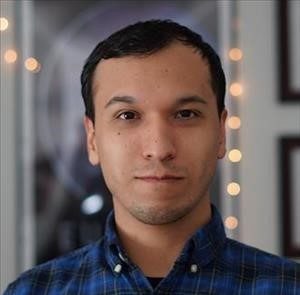
Ray is from the Rio Grande Valley in South Texas. He has a bachelor’s degree in Computer Information Systems from the University of Texas – Pan American. He is currently pursuing his master’s in Computer Science from the University of Colorado Boulder. Ray moved to Colorado in 2015 to join Lockheed Martin’s Data Warehouse team. Since joining Deep Space Exploration, he has supported Flight Software Operations for the Spitzer, Odyssey, and OSIRIS-REx missions. In his free time, he enjoys paddle boarding, traveling, and hiking with his wife.

Bio:
Sandy Freund began her career at Lockheed Martin Space as a college intern. Throughout her career Sandy has supported numerous deep space missions including Mars Odyssey, Genesis, Stardust, Mars Reconnaissance Orbiter, the Phoenix Mars Lander, Juno, MAVEN and OSIRIS-REx. During that time, she has worked in multiple different aspects of the mission lifecycle, including spacecraft design, integration & test, and mission operations. Sandy has a Bachelor’s of Science in Computer Engineering from the University of Denver and a Master’s of Science in Space Systems Operations Management from Webster University. Outside of work, Sandy enjoys traveling and spending time with her husband and 3 boys.
Bio:
Bio:
Bio:
Bio:
Bio:
Bio:
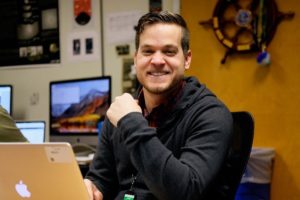
Kenny joined the OSIRIS-REx project as a Flight Dynamics engineer and a member of GSFC’s Navigation & Mission Design Branch in 2009. Since then, he has supported the mission through navigation analysis and operations, ground system and tool development, and overall team management. His expertise and research interests include precision orbit determination and geophysical parameter estimation, optical navigation, and small-body mission design. Kenny previously led flight dynamics activities for multiple mission proposals and is the Flight Dynamics Lead for GSFC’s Space Science Mission Operations group. He holds Bachelor’s and Master’s degrees in Aerospace Engineering from Penn State University and the University of Maryland, respectively. He is a proud husband and father of two boys and enjoys spending time with friends and family. It has been an honor and privilege for him to serve on the OSIRIS-REx team, and Kenny is beyond excited for a successful TAG and sample return.

Bio:
Sierra Gonzales began her career at Lockheed Martin Space as a college intern working on the commercial side and applied much of her knowledge and experience in 3D modeling and 3D printing. She jumped into the OSIRIS-REx program right after college as a Systems Engineer and trained as a Real-time Operator. She has both an Bachelor’s of Science and Master’s of Science degree in Mechanical Engineering from the University of Nevada-Reno and is currently working on a Space Systems Certificate from the University of Denver. In her free time, she plays Double Bass with the Denver Pops, enjoys snowboarding, baking asteroid themed desserts, and watching basketball.
Bio:
Bio:
Bio:
Bio:
Bio:
Bio:
Bio:
Bio:
Bio:
Bio:
Bio:
Bio:
Bio:
Bio:
Bio:
Bio:
Bio:
Bio:
Bio:
Bio:
Bio:
Bio:
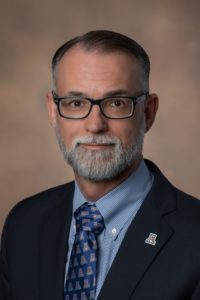
Dante Lauretta led the science team and the OSIRIS-REx mission’s science observation planning and data processing. Dante has been part of the mission since its inception, and he coined the mission acronym, OSIRIS-REx. He is a regents professor of planetary science at the University of Arizona and a UArizona alumnus, graduating with dual degrees in Physics & Mathematics and Oriental Studies, emphasis in Japanese. He earned his Ph.D. in Earth and Planetary Sciences from Washington University. Outside of the mission, Dante designs games for his company, Xtronaut, which aims to inspire the next generation of scientists, engineers and citizen scientists through space mission-related games and education programs. Dante also sits on the Board of Directors of the Boys and Girls Clubs of Tucson. In his spare time, Dante enjoys spending time with his wife and two sons.
Bio:
Bio:

Bio:
Jason received his Bachelor’s degree in Aerospace Engineering from Embry-Riddle Aeronautical University in Daytona Beach, Florida, his Master’s degree and Ph.D. in Aerospace Engineering Sciences from the University of Colorado Boulder under the advisement of Dr. George Born. He was a member of the Juno Orbit Determination Team during pre-Earth-flyby operations until he realized asteroids are where it is really at. He joined KinetX in 2015 to lead the Orbit Determination Team for OSIRIS-REx. He received the NASA Exceptional Engineering Achievement Medal and PI Award of Distinction in 2019 for efforts dedicated towards OSIRIS-REx. Keep on keeping on. GO BUFFS.
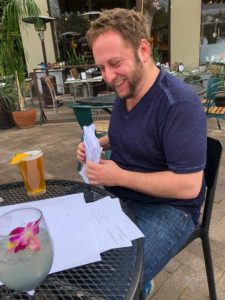
Bio:
As a member of the OREx team Erik has performed optical navigation, assisted the maneuver design team, and helped develop the tools to track particle events on the surface of Bennu.
Previously, Erik was also a member of the optical navigation team for the New Horizons Mission’s Arrokoth encounter which took place on New Year’s Day, 2019. Erik received a B.S. in Physics from Stanford University, an M.S. in Theoretical Particle Physics and Cosmology from New York University, and a M.S. in Aerospace Engineering from the University of Colorado Boulder. Before joining KinetX, Erik worked for Advanced Space, LLC in mission design. Erik is a third generation New Yorker, and currently lives in the Koreatown neighborhood of Los Angeles with his fiancée Laura Hernandez and his cat Billie Holiday. Erik enjoys biking, sailing, spending time at the beach, and late night taco stands.
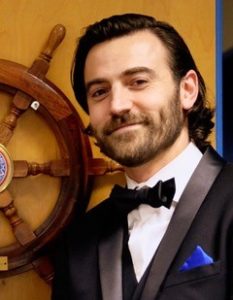
Bio:
Andrew attended the University of Arizona, and he graduated with B.S. in Aerospace Engineering, 2009. Andrew then attended the University of Colorado and graduated with M.S. Aerospace Systems in 2015. He is currently working at KinetX Aerospace as a maneuver and trajectory analyst on the OSIRIS-APEX Mission. Andrew grew up in Tucson, Arizona and will forever be a Wildcat fan through and through, Bear Down!
Bio:
Bio:

Bio:
Josh came to work for Goddard Space Flight Center in January of 2017, making his way from Minnesota, as a pathways intern. That year, he received his PhD degree in aerospace engineering from Iowa State University under the guidance of Dr. Bong Wie. With his work at GSFC, he has been able to work on Planetary Defense, image processing, shape modeling, and trajectory design projects. OSIRIS-REx was the first project that he was able to gain experience with orbit determination and optical navigation processing. During his free time, Josh likes to be outdoors, be it hiking, running, or foraging. Splitting wood is fun too!
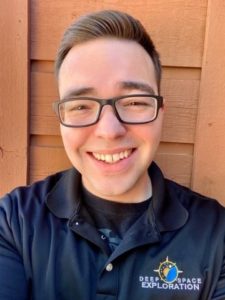
Bio:
Alec works as Systems Engineer as well as a Real-Time Operator on multiple NASA Deep Space missions. Prior to joining OSIRIS-REx, Alec worked in Lockheed Martin’s Mission Solutions division in numerous Systems Engineering and RF Engineering roles supporting critical ground and space communication systems for the Air Force as well as payload testing for Commercial Space programs. Alec has a Bachelor’s of Science in Mechanical Engineering from the University of Colorado at Colorado Springs and is currently pursuing a Master’s of Engineering in Systems Engineering from the same university. Outside of work, Alec is an avid gamer (both tabletop and video games), likes to tinker with his 3D printer and travel the world with his wife.
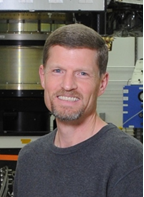
Bio:
Chris began his career at Lockheed Martin as a Stress engineer, working on Stardust, Mars 2001 Lander and the Odyssey spacecraft. In 2001, he transitioned to a Thermal role in mission operations on Odyssey and continued as a Thermal engineer on Mars Reconnaissance Orbiter, Phoenix, GRAIL and OSIRIS-REx, supporting design, ATLO and mission operations on all four programs. Chris has a Bachelor’s of Science in Mechanical Engineering from the University of California, Santa Barbara and a Master’s of Science in Mechanical Engineering from the University of Colorado. Outside of work, Chris enjoys fishing, hiking, backpacking and spending time with his wife and two kids.
Bio:
Bio:
Bio:
Bio:

Bio:
Graham joined Lockheed Martin in 2009 where he served as the Software Configuration Manager for a number of Deep Space Exploration (DSE) missions including Juno, GRAIL, MAVEN and OSIRIS-REx. After several years with DSE he left the group to work on the GOES-R weather satellite and then served as the Software Quality Team Lead for the Orion Human Space Flight program. Graham eventually found his way back to DSE where he now serves as the Mission Operations Assurance Engineer for several missions including OSIRIS-REx. Outside of work Graham coaches his son and daughter’s lacrosse teams and enjoys cycling, snowboarding and running.

Bio:
Ron is a University of Wisconsin graduate with a Bachelor’s Degree in Physics. He joined NASA in 2001 as an Optical Engineer supporting technology development activities for the James Webb Space Telescope. He joined OSIRIS-REx in 2008 as the Deputy Project Systems Engineer developing the Step 1 proposal for NASA’s New Frontier Program, a role he maintained through launch in 2016. He then became the Mission Systems Engineer for OSIRIS-REx within GSFC’s Space Science Mission Operations Project Office, leading advance planning efforts for proximity operations at asteroid Bennu and serving as chair of the Mission Planning Board. Ron is the recipient of NASA’s Exceptional Service Medal.
Bio:
Bio:
Bio:
Bio:
Bio:
Bio:

Bio:
Derek has assisted in the development and operation of the OSIRIS-REx optical navigation and TAGCAMS camera systems since the beginning of his tenure at KinetX in June 2013. He also served on the optical navigation team for the New Horizons flyby of the Pluto system in 2015, led the team for its extended mission flyby of Arrokoth in 2019, and now serves as the Deputy Navigation Team Chief. Derek is working as a lead navigation engineer for the LunaH-Map CubeSat mission to the Moon, and supports various internal Research & Development projects. Prior to working at KinetX, Derek was a student at Cal Poly SLO and worked in the university’s CubeSat lab. Outside of the office, Derek enjoys time at the beach, camping, dog park picnics, and aimlessly exploring the city listening to podcasts.
Bio:
Bio:
Bio:
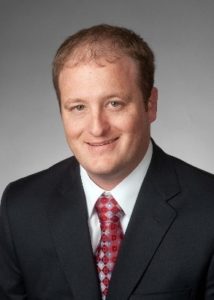
Chris has worked on a variety of research and development projects at Lockheed Martin, including robotics, proximity and docking operations, and pose estimation. He supported the development of OSIRIS-REx Natural Feature Tracking system and the Lucy Terminal Tracking system. Chris joined the OSIRIS-REx GN&C operations team in 2018 and has served as the TAGCAMS lead since that time. He has a Bachelor of Science in Mechanical Engineering and a Master of Science in Mechanical Engineering degrees from the University of Nebraska – Lincoln.
Bio:

Bio:
Ryan has worked in various roles within the Guidance Navigation and Controls subsystem since starting with Lockheed Martin Deep Space Exploration in 2005. During that time, he has worked on pointing controls for the Spitzer space telescope, control design for the Gravity Recovery and Interior Laboratory (GRAIL), control design for OSIRIS-REx and also served as the Certified Principal Engineer (CPE) for Natural Feature Tracking on OSIRIS-REx prior to launch. Most recently Ryan has served as the GN&C Lead for OSIRIS-REx operations since launch in September of 2016.
Bio:
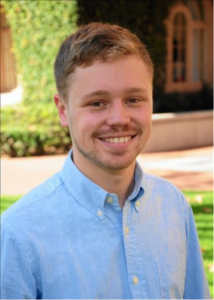
John Pelgrift has been a member of the OSIRIS-REx navigation team since starting as an intern for KinetX Aerospace in 2017. He has worked doing both optical navigation and orbit determination for the mission. Raised in Oakland, California, John received a BS in Physics from Cal Poly San Luis Obispo in 2016 and an MS in Astronautical Engineering from the University of Southern California in 2017. OSIRIS-REx is the first project he worked on after finishing school, providing an exceptional learning experience and introduction to solar system exploration. In addition to OSIRIS-REx, John worked as a part of the New Horizons navigation team for the flyby of the Kuiper Belt Object Arrokoth in 2019. He lives in Los Angeles with his partner Izzy and their two cats, Teddy and Mr. Macaroni.

Bio:
Chris has worked on a variety of space vehicle propulsion systems during his 33 year career with the LM Space Systems. He has performed space vehicle propulsion design, analysis, and test on multiple programs including Atlas, Titan, and Delta rockets, X-33 in Palmdale CA, Dream Chaser spacecraft, the Juno Jupiter orbiter, and now OSIRIS-REx.
Bio:
Bio:
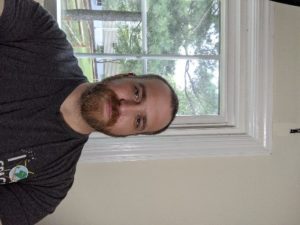
Devin attended the University of Maryland College Park where he earned his Bachelor’s degree in Physics and later his Master’s degree in Mechanical Engineering. He started working in mission operations for the Solar Dynamics Observatory fresh out of college. Devin eventually became the operations subject matter expert for thermal, power, and the two dedicated 18 meter antenna dishes that support SDO in White Sands. Devin transitioned over to operations systems engineering working numerous in-flight engineering anomalies throughout the Space Science Mission Operations fleet. Devin is the OSIRIS-REx Flight Operations Manager and works with the mission teams to help find solutions to cross-element technical and planning problems. He received an Agency Early Career Public Achievement Medal. Outside of work, Devin spends time with his yellow Labrador named Io and coaches a youth soccer team in the neighborhood where he grew up with some of his childhood friends.
Bio:
Bio:
Bio:
Bio:
Bio:
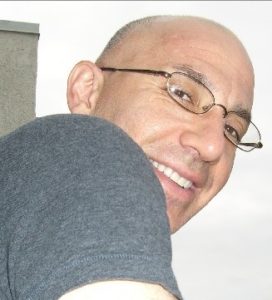
Bashar has worked as an applied physicist in a University research and development setting for 40 years on various R&D projects. Thirty-five of those years have been at the University of Arizona’s Lunar and Planetary Laboratory, working on spacecraft and remote sensing system design & development, test, calibration, planning & operations, data processing and analysis. He has also worked in radiometry, thermal modeling, radiative transfer, photogrammetry & stereo-photoclinometry, ground-based astronomy, noise analysis, integrated circuit fabrication, laser and microwave device system development and elementary particle physics. Bashar was born in Damascus, Syria, but mostly grew up in cloudy Champaign-Urbana, IL and hazy Greensboro, NC before he crossed the Mississippi and Rockies and discovered Tucson, AZ and its clear nighttime skies. He enjoys writing, biking and spending time with his wife and 2 children. He holds a BS in physics and chemistry, an MS in physics, and a PhD in planetary sciences.
Bio:
Bio:
Bio:

Bio:
Heather joined the OSIRIS-REx Communication and Public Engagement team early on in her career. She has supported the team and the mission by using her work to help captivate the public's attention during the spacecraft's assembly, launch, asteroid operations, and sample collection phases of the mission. Heather performs a variety of roles which make her a valued part of the team: visual communications, content strategy, creation and management, and public and media relations. As a University of Arizona alumni, she holds a Bachelor’s of Visual Communication and enjoys spending her time outside of work travelling and horseback riding.
Bio:
Bio:
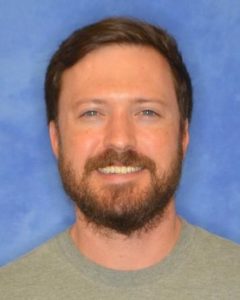
Andy Ryan stared with OSIRIS-REx as a graduate student in 2015. He worked on developing laboratory experiments to study the thermal properties of asteroid regolith simulants and worked as an OTES instrument operator during the Earth gravity-assist mission phase. In 2018, Andy was hired as a postdoc, first at the Observatoire de la Côte d’Azur in Nice, France then at the University of Arizona, to develop new numerical tools for thermal analysis of the asteroid, and to aid in thermal data analysis. Andy holds a BS in Environmental Geoscience from Slippery Rock University of Pennsylvania and both a Master of Science and PhD in Geological Sciences from Arizona State University. Andy enjoys cooking, playing guitar, reading, studying the French language, and spending time with his dog, Abby, and cat, Oats.
Bio:
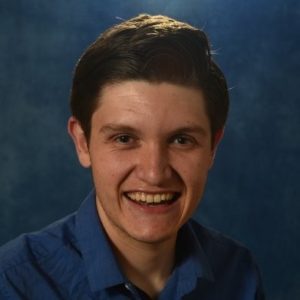
Eric Sahr is an Optical Navigation Engineer working for KinetX Aerospace in Simi Valley, California. He joined the OSIRIS-REx Optical Navigation Team in 2017. Prior to working in navigation, he worked on OSIRIS-REx at the SPOC as an undergraduate employee and as a graduate student. Eric earned his Bachelor’s of Science in 2015 and his Master’s of Science in 2017, both in systems engineering at the University of Arizona. During his undergraduate work, he led a team of undergraduates to propose, design, build, and fly with an experiment in microgravity. When not flying spacecraft, he enjoys backpacking, rock climbing, traveling, photography, and board games
Bio:
Bio:
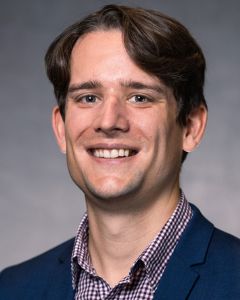
Joe is a Research Scientist working at the Lunar and Planetary Laboratory (LPL) at the University of Arizona. He serves as the Outreach Coordinator for LPL, teaches the General Education courses for the department, and operates the department's graduate field trips every semester. Joe received his B.S. in Earth and Planetary Science from the University of California, Santa Cruz in 2014, and his PhD in Geology from the University of Maryland in 2020. He worked as a postdoc at NASA/Caltech's Jet Propulsion Laboratory from 2020 to 2023.
Bio:
Bio:
Bio:
Bio:
Bio:
Bio:
Bio:
Bio:
Bio:
Bio:
Bio:
Bio:
Bio:
Bio:
Bio:
Bio:
Bio:
Bio:
Bio:
Bio:
Bio:

Bio:
Mathilde Westermann began her career working on OSIRIS-REx at the University of Arizona as a graduate student intern. After receiving her degree in the summer of 2016, she was hired on the mission full time to work as part of the Science Planning Team, designing and implementing science observations. Mathilde has a B.S. in Geoscience and an M.S. in Geographic Information Systems, both from the University of Arizona. She is a born and raised Tucsonan who loves the desert and its creatures including her husband and dog Mr. Otto. Mathilde plans to continue working with OSIRIS-REx through sample analysis and hopes to work on other space missions in the future.
Bio:
Bio:
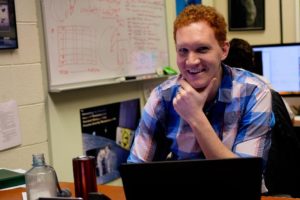
Dan Wibben is the Maneuver and Trajectory Design lead for the OSIRIS-REx asteroid sample return mission with the Space Navigation and Flight Dynamics practice at KinetX Aerospace, Inc. Prior to joining KinetX in 2015, he worked at the University of Arizona as the OSIRIS-REx Science Processing and Operations Center Systems Engineer. He originally joined the mission as a graduate student at the University of Arizona in 2011. He received his B.S. degrees in Aerospace and Mechanical Engineering, and M.S. and Ph.D. in Systems Engineering from the University of Arizona where his research was focused on nonlinear guidance techniques for asteroid proximity operations and planetary landing.
Bio:
Bio:
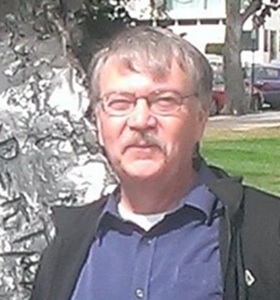
Bobby G. Williams holds degrees in Aerospace Engineering from the U. of Texas (B.S. and M.S.) and the U. of Southern California (PhD). While employed at CalTech’s Jet Propulsion Laboratory, he eventually headed the orbit determination teams at JPL for the Viking missions to Mars, the Pioneer Venus Orbiter mission, and the Earth oceanographic mission TOPEX/Poseidon; he was Navigation Team Chief for the NEAR mission to asteroid Eros. He participated in gravity field determination for both Mars and Venus and was a member of the Phobos Experiment Team that first determined the mass of the Martian moon, Phobos, from spacecraft tracking data. At JPL and later at KinetX Aerospace, he has supported navigation trade studies and design for many space mission proposals, including proposals and site visits for OSIRIS and OSIRIS-REx. His wife, Beverly, three children, and seven grandchildren keep him grounded in spite of having his head in space.

Bio:
Cat came to OSIRIS-REx via a meandering path through writing, editing, program coordination, and geoscience. Before moving to Tucson, she spent several years in D.C. working for the National Science Foundation, the U.S. Global Change Research Program (USGCRP), and the journal Science, along with some memorable summers of field work in the Tobacco Root Mountains of Montana and on the barrier islands off the Eastern Shore of Virginia. In 2014, her team at the USGCRP received an Award for Excellence from the Obama administration for outstanding contributions to the Third National Climate Assessment. Cat holds a BA in Geology from Oberlin College and an MS in Environmental Sciences from the University of Virginia. A retired rugby player, she enjoys hiking, stretching, traveling, reading fiction, and spending time with her companion and their cat.
Bio:
Bio:
Bio:
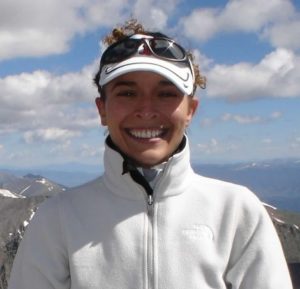
Jodi began her career at Lockheed Martin as a college cooperative education student with the Missiles and Fire Control organization. After college, Jodi transitioned to the Space organization, where she supported several missile and satellite programs as a Certified Principal Engineer and technical lead for development and flight hardware electronics prior to joining OSIRIS-REx as a Systems Engineer for mission operations. Jodi has a Bachelor of Science in Electrical and Computer Engineering from Northeastern University and a Master of Science in Mechatronics Systems Engineering from the University of Denver. Outside of work, Jodi enjoys spending time in the great outdoors hiking/backpacking and skiing/snowboarding.
Bio:
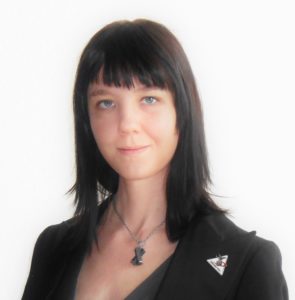
Zoe Zeszut joined the OSIRIS-REx team in March 2018. Her work is focused on science planning and operations, creating spacecraft commanding for science and OpNav observations, and reviewing commanding to ensure spacecraft safety. Zoe holds dual degrees from Ohio University: a BS in Geological Sciences and a BSC in Digital Media. She earned an MS in Earth and Planetary Science from Case Western Reserve University. Her MS thesis research, in collaboration with NASA Glenn Research Center, involved physical properties of meteorites. In her spare time, Zoe enjoys nature photography, drawing, painting, hiking, and collecting minerals and fossils.